 Help
Help
Written by Olena Lastivka
Olena is a nutrition and healthcare writer, runner, and gym enthusiast. She is keen on health and fitness research, modern studies on sports and nutrition, and various physical activities.

Fact checked by Ievgeniia Dobrynina
Ievgeniia Dobrynina is the Head of Nutrition and a fact checker at Unimeal.

Medically reviewed by Dr. Olena Avdiievska, MD, RDN
Dr. Olena Avdiievska is a nutritional and medical expert at Unimeal. She is an MD and RDN in Dietology and nutrition and a university professor with 76 scientific publications.
Mission seems to be impossible when you open the shades on Monday, and it’s still dark outside, raining and gloomy sky. But still, you have to wake up and get things done. This kind of morning routine usually starts with a huge cup of black coffee.
It's rich in antioxidants1Yashin, A., Yashin, Y., Wang, J. Y., & Nemzer, B. 2013. Antioxidant and Antiradical Activity of Coffee. Antioxidants (Basel, Switzerland). DOI:10.3390/antiox2040230 and contains only 2 calories per serving. Coffee boosts energy and has stimulating effects due to caffeine. But if you are not a coffee lover or are trying to quit this drink, here are 3 caffeine-free alternatives to stay energized.
Eat tasty food and lose weight with Unimeal app!
Take a Quiz – Get personal meal plan – Achieve your weight goals!
Start Quiz
It's fermented probiotic tea is made from brewed tea, sugar and a symbiotic colony of bacteria and yeast (SCOBY). Natural bacteria produce in tea enzymes, vitamins and amino acids. Kombucha may boost not only your energy level but also has a detox effect.
Usually, it’s sold in healthy or organic food stores. You can also grow “magic SCOBY” and ferment kombucha at home, but it’s a long process and be ready that jelly-like mushroom will live in your jar (spoiler: it looks weird and scary).
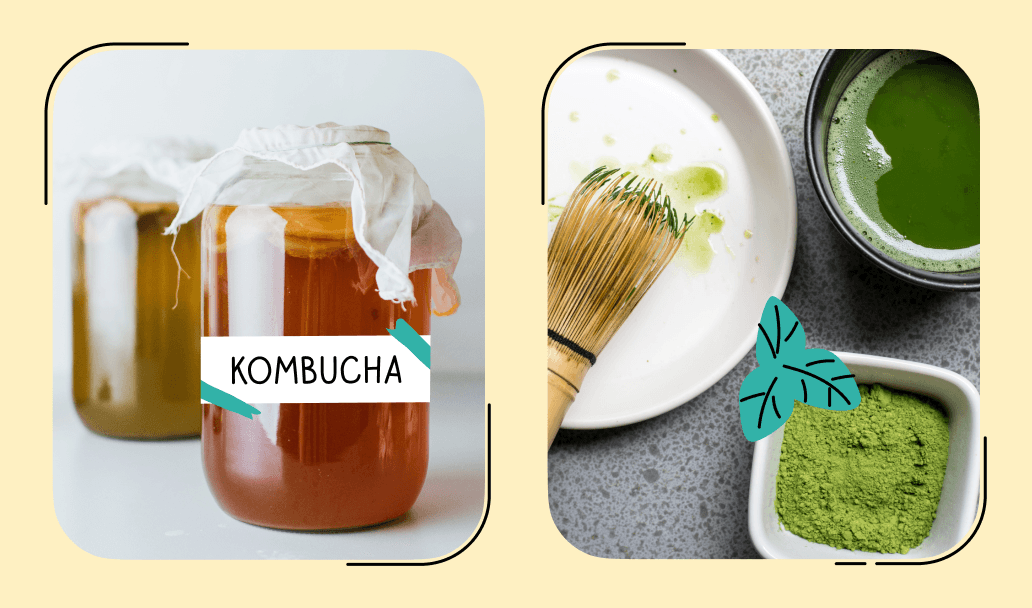
This drink is called tea, but initially, it’s Amellia Sinensis plant rinded into a fine green powder. Matcha is traditionally served for tea ceremonies in Japan.
Compared to other brewable green teas where the whole leaves are used, power is a much more concentrated source of an antioxidant called epigallocatechin gallate2Weiss, D. J., & Anderton, C. R. (2003). Determination of catechins in matcha green tea by micellar electrokinetic chromatography. Journal of chromatography. DOI:10.1016/s0021-9673(03)01133-6 (EGCG). Matcha is higher in caffeine than regular brewed green tea and sometimes higher than coffee.
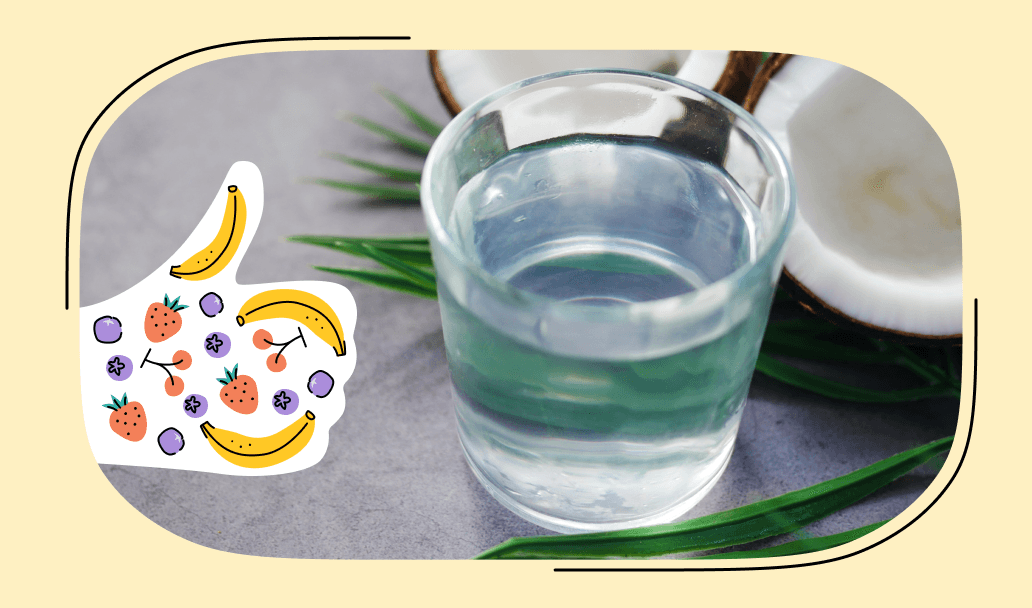
It's a good coffee alternative for those who live in the coconuts palms zone and can consume fresh fruits. Store-sold coconut water often has added sugar so pay attention to the ingredients when you buy it.
Coconut water is high in potassium and also boosts energy so well that it is called nature's sports drink. It can even help lower blood pressure.
You can drink water itself or add it to your morning smoothies. It’s matched with bananas and fresh seasonal berries.
This drink is made from roasted chicory root instead of coffee beans. Chicory tastes like coffee but is naturally caffeine-free3Puhlmann, M. L., & de Vos, W. M. (2020). Back to the Roots: Revisiting the Use of the Fiber-Rich Cichorium intybusL. Taproots. Advances in nutrition (Bethesda, Md.) DOI:10.1093/advances/nmaa025. It can lower blood sugar levels, promote beneficial gut bacteria growth, and reduce constipation.
Before consuming and adding chicory coffee to your morning routine, consult with your doctor. This root has side effects; for example, it may trigger allergy and is also forbidden for pregnant women.
Black tea can boost your energy without overstimulating your heart and, according to studies4Brown, C. A., Bolton-Smith, C., Woodward, M., & Tunstall-Pedoe, H. (1993). Coffee and tea consumption and the prevalence of coronary heart disease in men and women: results from the Scottish Heart Health Study. Journal of epidemiology and community health. DOI:10.1136/jech.47.3.171, even lower the risk of heart disease. Same as the coffee, it contains caffeine and an extra amino acid called L-theanine, which helps you to stay focused and improves alertness. One scientific investigation5Ashfique, Rizwan; Zinchenko Artyom; Özdem Ceyona; Rana Md Sohel; Al-Amin, Md Mamun. 2017. The effect of black tea on human cognitive performance in a cognitive test battery. Clinical Phytoscience; Heidelberg. DOI:10.1186/s40816-017-0049-4 showed the effect of black tea on cognitive performance.

Participants were allowed to drink either 250ml of black tea or water. They also were given tests of sustained attention, memory, executive function and mathematic calculations. Those who consumed the black tea made fewer errors and performed significantly faster on cognitive tasks than others.
Unimeal does not diagnose or suggest treatments. Any description of the diet, training plan or supplement should be discussed with your current physician or nutritionist. This article does not address specific conditions and is simply meant to provide general information on healthcare topics. Following any advice is at your own initiative and does not impose any responsibility on the blog authors for your health and safety.
Sources:
By choosing high-quality sources, we make sure that all articles on the Unimeal blog are reliable and trustworthy. Learn more about our editorial processes.
1.
2.
3.
4.
5.